
[Trip Review] Demystifying the Dolomites
Planning a trip to the Dolomites during the summer? Read this!
TRAVELITALY
The Dolomites will never be the easiest trip to plan because there's so much to do, so much to decide, and you can't possibly cover all the attractions unless you've got many many days to spare.
If you are not familiar with the Dolomites, it is a stunning mountain range in northeastern Italy, famous for the diverse landscapes, and dramatic peaks. The Dolomites is part of the Southern Alps, and I would say is suitable for visits all year round. I'm not into skiing so I visited the Dolomites in early summer (June 2025) and thoroughly enjoyed myself.
Trip Planning - Where to Arrive
As mentioned earlier, most people do not have lots of time to spare in the Dolomites, hence it pays to plan well for the trip.
While you can certainly get around via public transport, I do not recommend it. You should rent your own car for travelling around the Dolomites. Rent a small but powerful car that makes it easy for you to overcome tricky mountainous roads but allows you to slip the car into tight parking spaces.
You can reach the Dolomites region via different gateway cities. Some people may recommend flying into Venice or Milan, where flights are plentiful. However, Milan is easily a 6 hours drive from the Dolomites region, while Venice is not the cheapest city around. I recommend flying into Verona (which was what I did for this trip). Verona isn't as expensive as Venice, and is also just two and a half hours drive from one of the major Dolomites attraction, Seceda.
Trip Planning - Where to Stay
The Dolomites will never be cheap and there's only so much you can do to manage the costs related to your accommodation. The cost is also dependent on how you want to manage your overall itinerary; some travellers may see a benefit in minimising the travelling involved, and decide to stay in the same accommodation for the whole duration of the trip. Others, like me, are willing to cover more attractions (by driving more), and hence, are more flexible in their accommodations.
I stayed at the following places:
The above hotels are all fairly comfortable, and I don't have bad things to say about them. When you are booking your accommodation, do take note whether it comes with free parking and breakfast. If your accommodation doesn't come with free parking, then you will have to look up parking spots near your choice of accommodation in advance. Breakfast is very important (in my opinion), as that's the meal that will provide you with the energy to start your hikes. Depending on your itinerary, you may or may not have time for lunch :(
Trip Planning - Where are the best hikes
None. Period.
What's best for me may not be the best for you.
Some hikes will definitely be more popular than the others. However, I would very much prefer a quieter, less crowded hike over another that's busy with tourists. There's no point in me recommending an attraction or a hike as the conditions may be completely different.
I can only give you advice and tips that will hopefully make your trip to the Dolomites a bit more enjoyable.
Seceda
I arrived at Ortisei in the early afternoon. Parking should not be a problem in Ortisei, you can park your car here or here. The latter is probably more convenient if you decide to take the cable car up to Seceda, however, this parking spot will also cost you more.
The Seceda in Val Gardena is a 2,519 metre-high mountain in the Dolomites. As part of the Puez-Odle Nature Park, the Seceda is a prime destination; the region around the mountain is also known as "Seceda".
The Seceda is one of the most famous photo spots in the Dolomites, and the photo below is what you should be after.
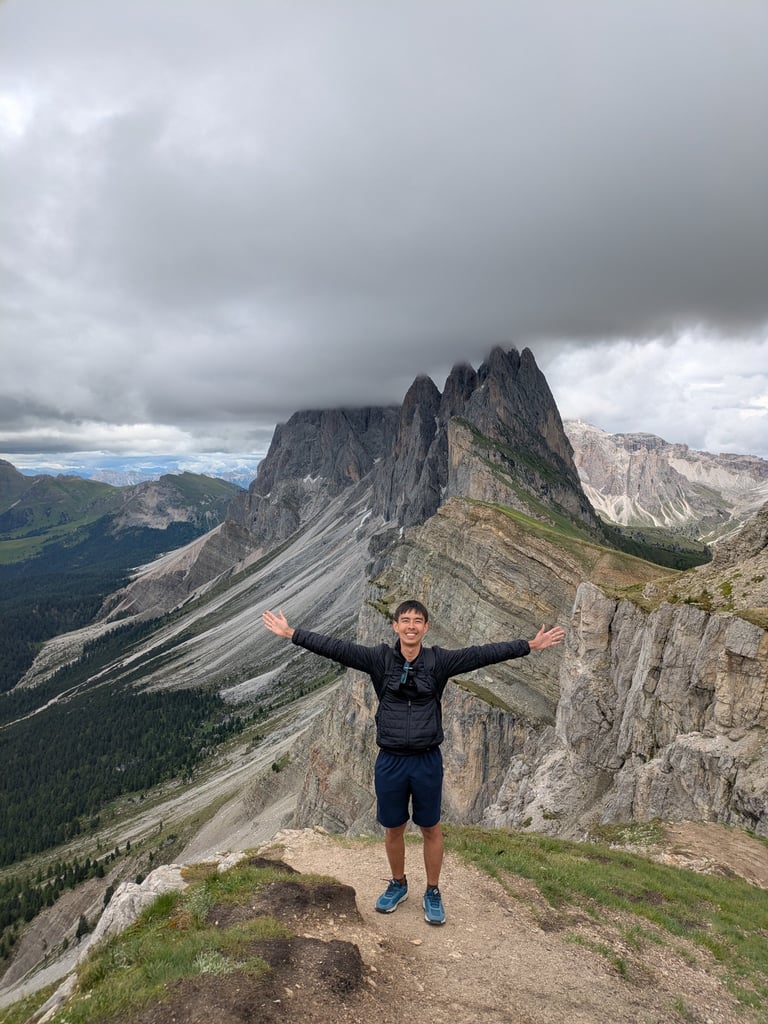
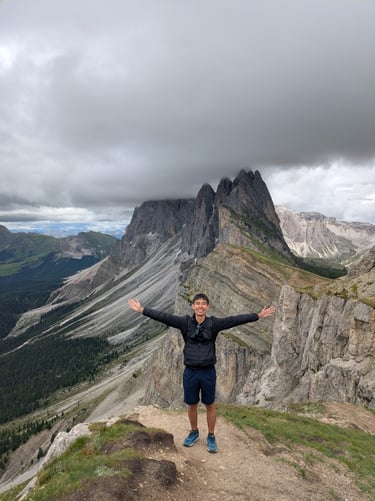
Remember what I said earlier about the hike conditions being completely different? Unfortunately for me, I went on a day when the sky was overcast with plenty of dark clouds, hence the photo above. I do hope you will get to visit Seceda on a day with much better weather!
Other than the poor weather, Seceda was very enjoyable. The hike was rather easy and while it was rather crowded, it was still manageable.
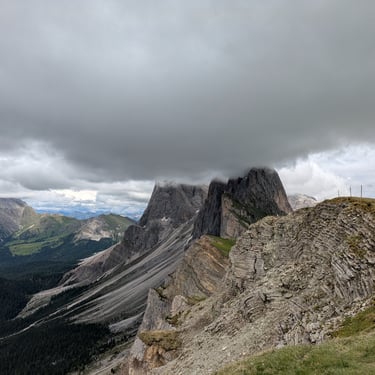
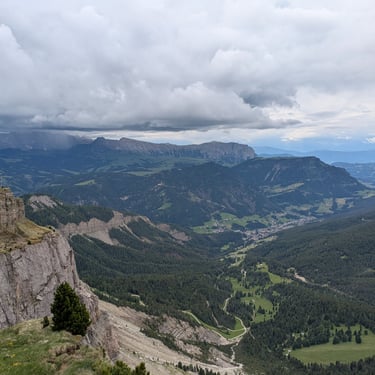
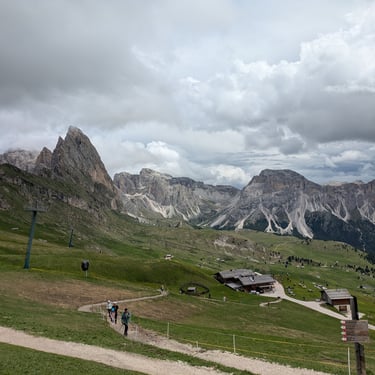
After visiting the Seceda, you should consider doing a hike around Seiser Alm (which I did) if you have time.
Vallunga
Armed with a good night's rest at Hotel Europa, there's no better way to start the day other than going for a leisurely stroll at the Vallunga. You can park your car here.
The Vallunga is a small valley that branches off the famous Val Gardena. When I was there in the morning, there were few people there, and it was great enjoying a peaceful stroll in the valley while enjoying the company of the animals.
This was one of the easiest hikes across the entire Dolomites (children will have no difficulty completing it).
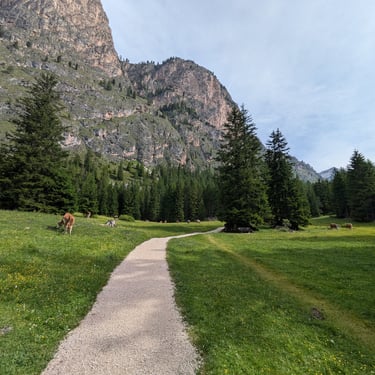
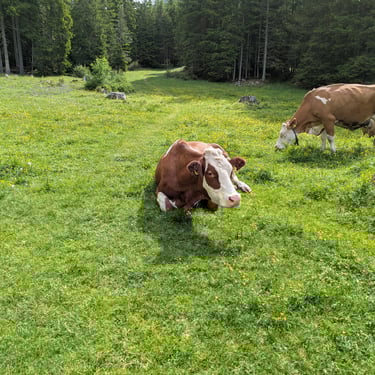
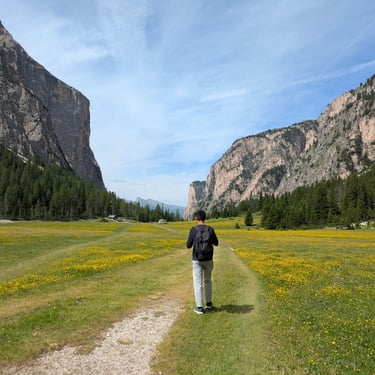
Lagazuoi
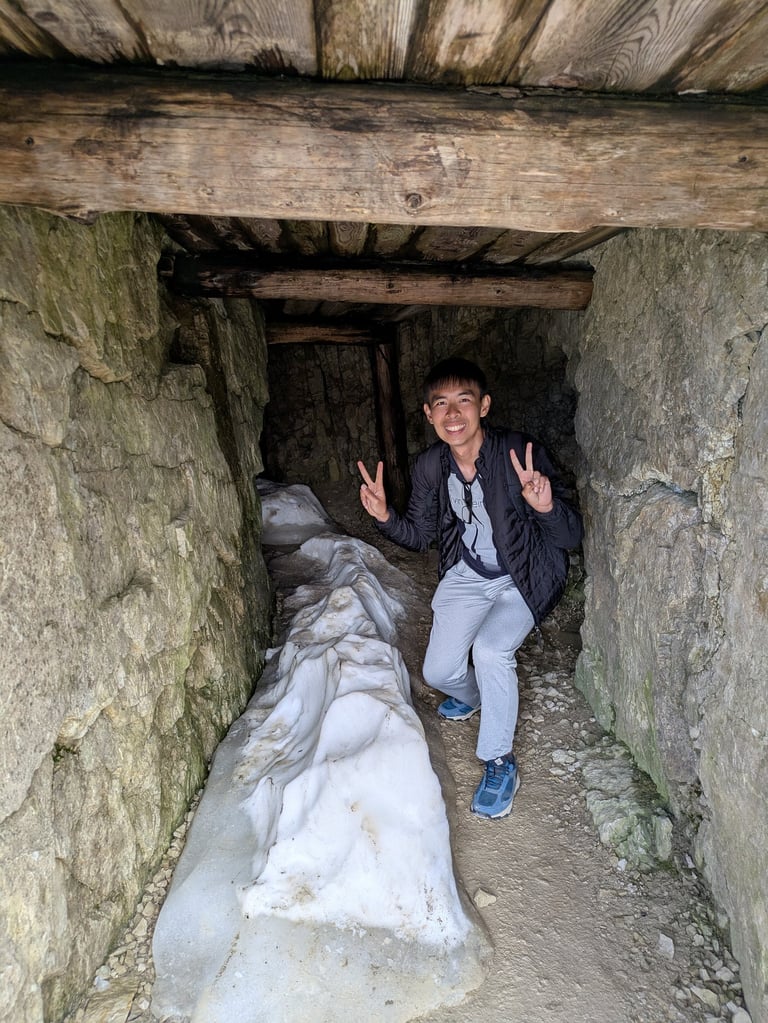
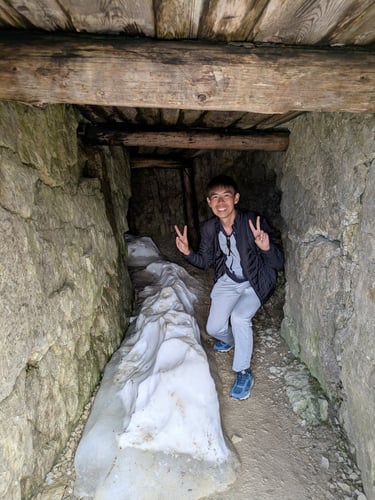
Lagazuoi is a mountain in the Dolomites region, and is particularly famous for its wartime tunnels along the Italian front of the First World War. You can park your car here, before taking the cable car up to the mountain.
The landscapes that you are able to view from Lagazuoi are absolutely stunning, and there's no doubt that you can only get these views from the Southern Alps.
The hike here wasn't particularly difficult, but do take note that there was ice formed along some of the paths despite it being summer. Do take care and avoid slipping on the ice.
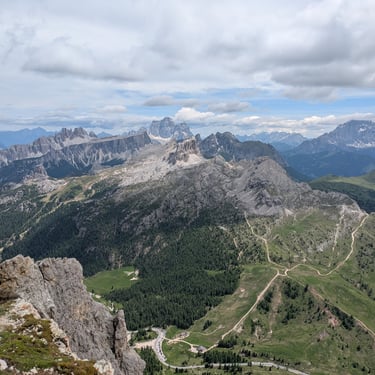
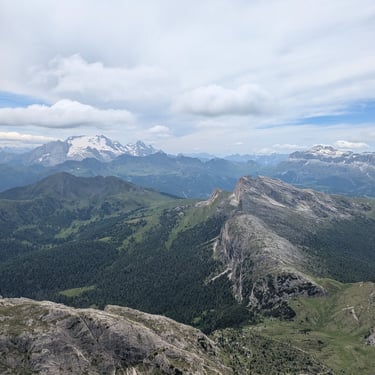
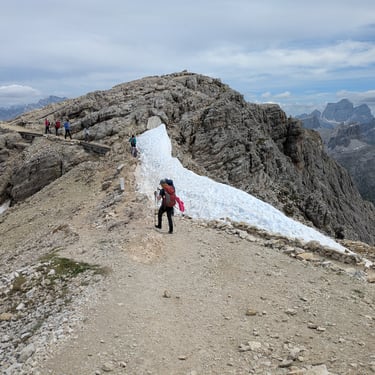
You can go with the suggested trek by this blog, but no matter what you do, don't miss the tunnels at Lagazuoi!
Cinque Torri
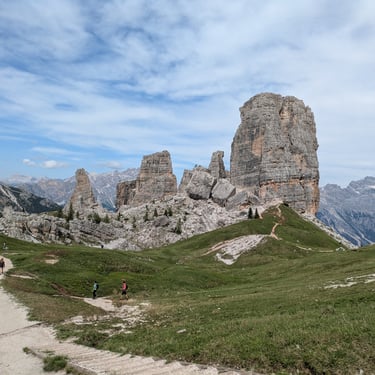
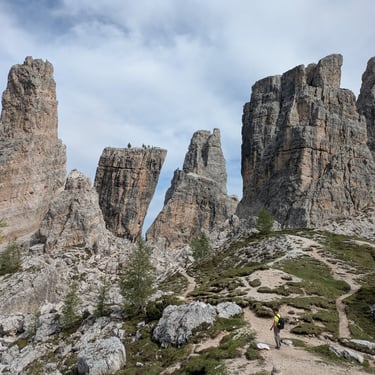
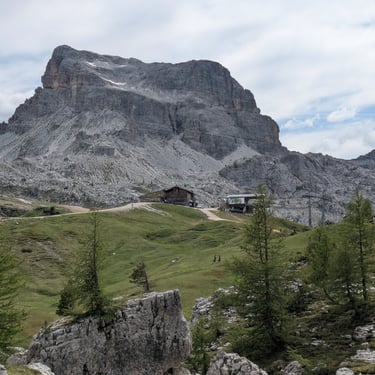
Fresh off viewing the stunning landscapes from Lagazuoi, a short drive of less than ten minutes brought me to the next attraction, Cinque Torri. You can park your car here, and take the cable car. You can go with this blog's suggestion on how best to enjoy Cinque Torri.
The Cinque Torri is a famous rock formation that appears to have five main pillars, hence how this rock formation got its name (in Italian, cinque is five). I hiked the circuit loop around the rock formation, and completed the loop in less than two hours.
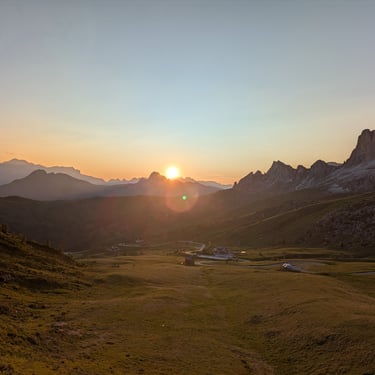
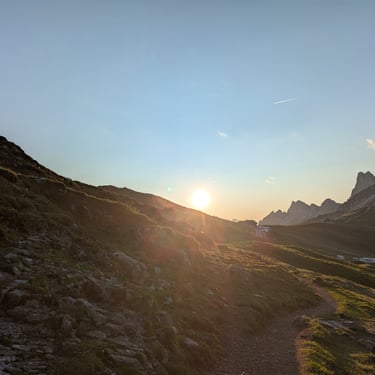
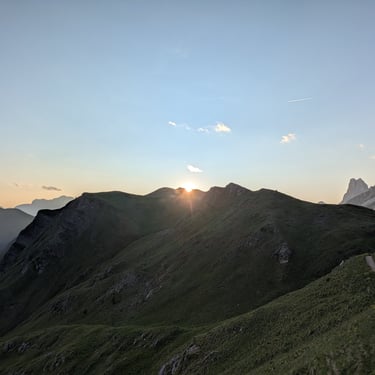
Once you are done with Cinque Torri, I recommend heading over to Giau Pass and enjoy a glorious sunset.
Tre Cime di Lavaredo
Would it be an exaggeration to say that Tre Cime di Lavaredo is the most famous hike in all of Dolomites?
Unlike all other hikes, you will need a car park reservation if you are visiting in the summer. Tip: try to get a reservation for early morning (e.g. 7:30 a.m., or earlier), it is summer anyway, so the sun will be up early and you should start your day early too. You will then park your car at Parcheggio Auronzo before commencing your hike. This is where you will be glad that you rented a car as the queues for the bus services to Tre Cime di Lavaredo are mind-blowing long.
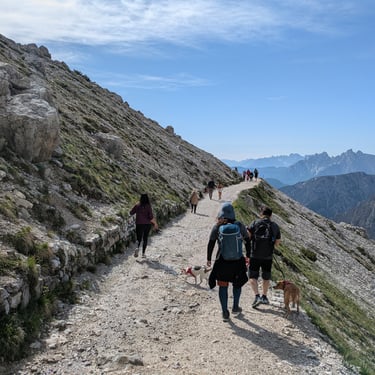
As you can expect from a popular hike, the hike itself isn't that difficult. There's no way you can get lost either; the gravel roads are well-demarcated and even if you don't follow the directions, you will never be far away from a fellow hiker.
I'm not going to reveal too much here. You should do the hike yourself and enjoy the marvellous scenery that Tre Cime di Lavaredo has to offer!
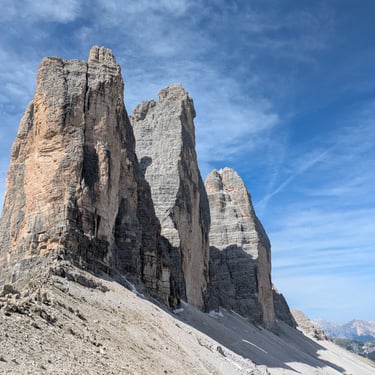
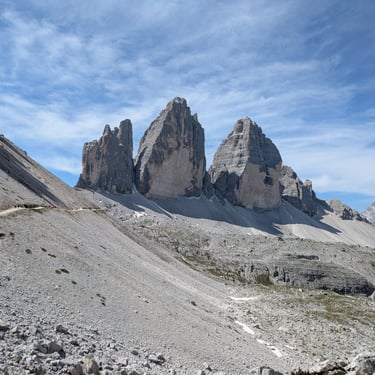
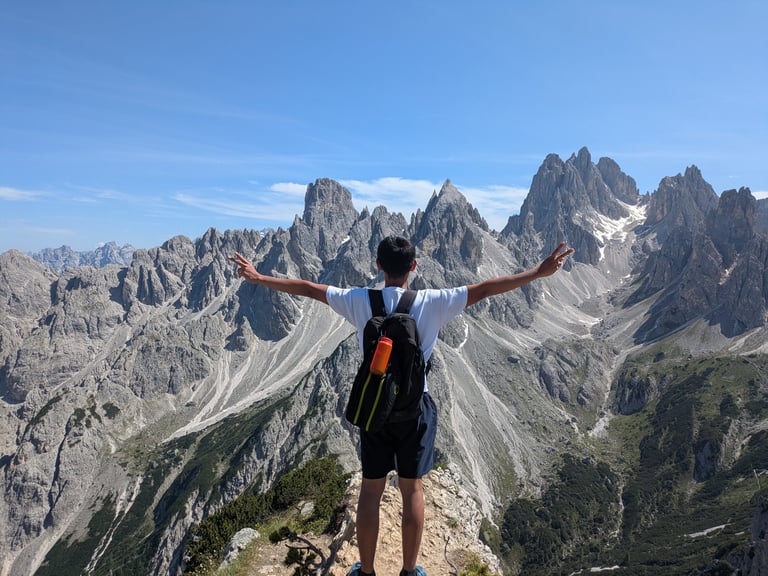
After completing the hike, why not head over to Punto Panoramico Dolomiti and remember the hike with a stunning photo? This is apparently an instagram-famous spot.
Lake Sorapis
Lake Sorapis is easily the most challenging hike mentioned here. Park your car at the trailhead here; you will be required to parallel park along the road, so if that's too challenging for you, an alternative is to stay at B&B HOTEL Passo Tre Croci Cortina where you can just leave your car at the hotel's carpark and walk over to the trailhead.
Please budget at least four hours to complete this hike. You can expect to use your hands to scramble across rocks, climb short sections of stairs and hike up with the aid of metal chains bolted into the cliffs. If it helps, bring a pair of gloves for this hike. I certainly wished I had a pair of gloves on while doing the hike.
Do not underestimate this hike. You can refer to this blog here that will give you a better overview of what to expect during the hike.
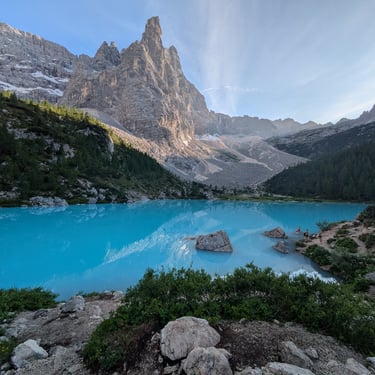
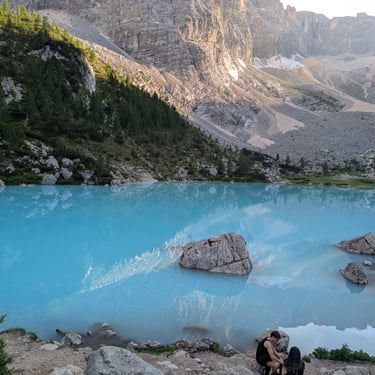
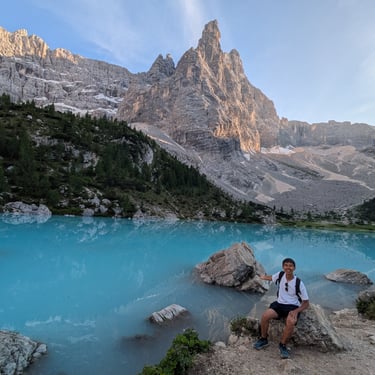
While the hike is not easy, you will be rewarded with stunning views of Lake Sorapis. The colour of the lake is unreal, and you should see it for yourself.
Other hikes and attractions
There's certainly more to see in the Dolomites, such as Lake Braies, Chiesa di Santa Maddalena, Averau, and many more. I'm not going into detail because they are bad, but I want you to strategise your time in the Dolomites. I've been to some of these other attractions, and I wish I was able to see them without feeling rushed.
If there's a takeaway from my time at the Dolomites, it would be to enjoy every moment and don't rush.
Final Tips
Prepare yourself for all sorts of weather even if you are visiting the Dolomites in the summer.
If you are driving from Verona or Venice, visit a large supermarket on the way to the Dolomites. Stock up on lots of water, and ready-to-eat food (e.g. bread). Dining in the Dolomites region is expensive, and you may not have time to enjoy a proper lunch depending on how packed your itinerary is.
Start your day early, and be prepared to end your days late. I don't recommend ending your hikes after 7:30 p.m though. It is never a good idea to hike in the dark.
Minimise driving where possible. Try planning an itinerary that goes around the Dolomites in a clockwise or anti-clockwise direction and avoid driving past the same roads over and over again. The Dolomites is huge so it helps to be as efficient as possible.
I'm not against electric vehicles. However, while I was in the Dolomites, I did not come across many charging points. The infrastructure may improve in the future but until then, you are better off getting a car that runs on petrol.
Conclusion
I don't think it is possible to create a single guide that summarises all that the Dolomites have to offer. I certainly hope you will find my attempt at creating such a guide to be useful, and if anything, inspire you to consider visiting the Dolomites next summer.
The Dolomites is a gem and I hope to visit it again soon.
Other Stories
Disclaimer: The content on this site is for informational purposes only and should NOT be taken as legal, business, tax or investment advice. The content does NOT constitute an offer or solicitation to purchase any investment.
This site does not take into account your personal financial situation or needs, and makes no representation and assumes no liability to the accuracy or completeness of the information provided here. This site shall not be liable for any losses that may arise as a result of the content published.
Want all of these in your inbox?
Subscribe to the newsletter and never miss a story.
We care about your data in our privacy policy.